Rising sea levels spell danger for shorebirds such as oystercatcher
Research shows that rising sea levels will drastically reduce the number of shorebirds in Europe. The number of oystercatchers will decline an additional 56 to 79 percent over the next 100 years.

Grant for research on Antarctic marine animals
Aquatic ecologist Wilco Verberk of Radboud University has received a grant of nearly 1 million euros from NWO to conduct research in Antarctica. From the money, he will investigate the influence of global warming on marine animals in Antarctica.

Researchers map aquatic-based, human-driven impacts on climate change
A study published in the journal Science illustrates how human impacts to aquatic ecosystems are contributing to the global climate crisis. One of the study's takeaways is that humans are impacting decomposition rates in rivers on a global scale.

'Not every exotic species needs to be controlled'
Certain invasive exotic species, such as the red swamp crayfish, are harmful to our environment because they transmit crayfish plague to native species. But there are also non-native fish and crayfish that are not harmful.

Aquatic ecosystems in hotter water – the message of Sarian Kosten’s inaugural lecture
During her inaugural lecture in February 2024, prof. dr. Sarian Kosten drew attention to the fact that surface waters are important emitters of greenhouse gases – which is why we should manage them differently.
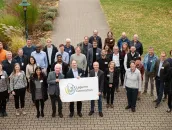
Legume Generation: Plant breeders and researchers collaborate for the next generation of legumes to reduce the protein gap in Europe
The Legume Generation consortium run more than 40 legume breeding and pre-breeding programmes. Breeders will join forces with leading research organisations to boost the breeding of soybean, lupin, pea, lentil, common bean and clover.

Effect of nitrogen deposition on animal species stronger than expected
A group of researchers from several Dutch and Belgian universities and research institutes show that nitrogen deposition alters the ratio of nutrients in plants, which in turn may lead to a reduced performance in many animal species.

Sarian Kosten appointed as Full Professor of Aquatic Ecology
Sarian Kosten has been appointed as Full Professor of Aquatic Ecology at the Faculty of Science from 1 May.

The dikes of the future will be more than just green turf
Rising sea levels, more frequent extreme precipitation and drier summers will put increasing demands on our dikes in the future. Ecologists claim that an increase in the number of flowers and herbs will go a long way towards solving the problem.

Future Dikes builds experimental dikes on Radboud campus
The research programme Future Dikes is researching how species-rich grass revetment can contribute to the erosion durability of a dike. A new research facility has been constructed at the campus to make experiments with grass revetment possible.