Thanks to research by two Radboud students, astronomers can now use the James Webb Space Telescope to look for sulphur
Thanks to research by two Radboud students, as of 1 July, scientists from Radboud University will be able to use the James Webb Space Telescope (JWST) to test their predictions.

Clock-like precision of pulsars opens new window for studying gravitational waves
A team of European astronomers, along with Indian and Japanese colleagues, has reported evidence that strongly suggests the detection of ultra-low-frequency gravitational waves. Such waves probably originate from pairs of supermassive black holes.

Academics find the teaching-research nexus fundamental but difficult in practice
The combination of teaching and research is considered fundamental to academia, but in practice the two tasks prove difficult to combine. This is evident from research by Kasja Weenink, Noëlle Aarts and Sandra Jacobs at Radboud University.

First long gamma-ray burst ever observed at centre of ancient galaxy
An international team of astronomers has observed a long gamma-ray burst near the centre of an ancient galaxy for the first time. The team, led by Andrew Levan (Radboud University), are publishing their findings in Nature Astronomy.

Radboud University and University of Namibia sign agreement on building telescope
Kenneth Matengu and Daniël Wigboldus signed a framework agreement to strengthen the collaboration between UNAM and Radboud University and to realise the construction of the Africa Millimetre Telescope in Namibia.

Library of Science closed 21 July
On Friday 21 July, the Library of Science will be closed due to the Four Days Marches (Vierdaagse).

Saturday 22 July: closure of Huygens building due to power outage
On Saturday 22 July 2023, the Huygens building will be closed do to the replacement of the emergency power controls.

Alonzo Church Award for Robbert Krebbers
Robbert Krebbers, associate professor of Software Science, will receive the Alonzo Church Award 2023. The prize is awarded annually to researchers who have made influential contributions to logic in computer science over the past 25 years.

Breakthrough: scientists develop artificial molecules that behave like real ones
Scientists from the Radboud University have developed artificial molecules that resemble real organic molecules. A collaboration of researchers simulated the behaviour of real molecules by using artificial molecules.

Effect of nitrogen deposition on animal species stronger than expected
A group of researchers from several Dutch and Belgian universities and research institutes show that nitrogen deposition alters the ratio of nutrients in plants, which in turn may lead to a reduced performance in many animal species.

Eventually everything will evaporate, not only black holes
New research by Michael Wondrak, Walter van Suijlekom and Heino Falcke of Radboud University has shown that Stephen Hawking was not completely right about black holes. All large objects in the universe will eventually evaporate.
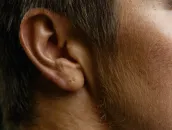
Algorithms for better cochlear implants receive NWO grant
The board of NWO's Applied and Technical Sciences domain awarded funding to a project by John van Opstal of Radboud University. Within the OtoControl 2.0 project, algorithms are being developed to produce better cochlear implants.
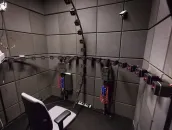
NWO Grant for Advancement of Cochlear Implant Algorithms
The NWO has awarded funding to OtoControl-2.0, led by John van Opstal, under the Open Technology Programme.

BlackGEM telescopes begin hunt for gravitational-wave sources at ESO's La Silla Observatory
The BlackGEM array, consisting of three new telescopes located at ESO’s La Silla Observatory, will scan the southern sky to hunt down the cosmic events that produce gravitational waves, such as the mergers of neutron stars and black holes.

Sarian Kosten appointed as Full Professor of Aquatic Ecology
Sarian Kosten has been appointed as Full Professor of Aquatic Ecology at the Faculty of Science from 1 May.
Far-reaching sustainable improvements to greenhouse complex
In 2022, great strides have been made in making the greenhouse complex on campus more sustainable. Gas consumption is going down to zero, the electricity use has been lowered by more than 30%, and the need for pesticides has also been reduced.

NWO grant for telescope that can film black holes in colour
The Dutch Research Council, NWO, has awarded a grant of 3.45 million euros to a Dutch team, together with British and Namibian astronomers, that will enable the first colour movies of black hole.

Sijbrand de Jong appointed as a new member of COVRA's Supervisory Board
Sijbrand de Jong, dean of the Faculty of Science, will join COVRA N.V.'s Supervisory Board from July 1, 2023. The shareholder has approved his appointment for a term of four years during the annual meeting.
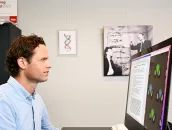
Future of data storage lies in DNA microcapsules
Within five to 10 years, we will be able to store data in DNA, Professor Tom de Greef expects. Data will not be stored in zeros and ones on a hard disk, but in the base pairs AT and CG that make up DNA.

Nitrogen also affects soil invertebrates and insects
Higher levels of nitrogen in the environment not only affect plants but also soil invertebrates and insects. What is more, climate change may amplify the negative effects of nitrogen. This is the conclusion reached by researchers from Radboud University.