

Master's specialisation of Physics and AstronomyParticle and Astrophysics
Particle physics and Astrophysics both use the laws of physics to study the universe. In this specialisation, you’ll dive into extreme worlds and unravel the inner workings of the universe from the smallest to the largest scales.
Something for you?
- This Master’s specialisation provides you with a thorough background in High Energy Physics, Astrophysics, and Theoretical Physics and the interface between them.
- There’s plenty of room to adapt the programme to your specific interests.
- You’ll get the opportunity to perform theoretical, experimental or observational research at IMAPP.
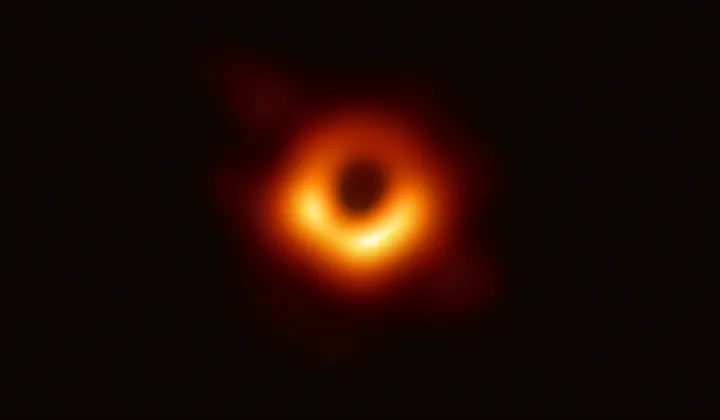
- It's possible to participate in large-scale research projects, such as the Large Hadron Collider at CERN, the Event Horizon Telescope or gravitational wave detectors like LIGO.
- You can contribute to forefront research by developing theoretical foundations for gravity and particle physics.
- You can study the synergy tracks Gravity+ and Computational and Data Science.
Admission requirements
Do you want to know if you can be admitted? Read more about the admission requirements of this programme.
Admission and applicationApply now
If you have determined that you can be admitted with your previous education, you can apply via Studielink.
Apply nowFactsheet
- Main language
- English (100%)
- Study duration
- 2 years (120 EC)
- Start
- September
- Contact hours
- 20-30
- Programme format
- Full time
- Degree
- Master of Science, specialisation of Physics and Astronomy
- Faculty
- Faculty of Science
- CROHO code
- 66984
- Accreditation
- NVAO
What will you learn
The Universe is an excellent laboratory: it tells us how the physical laws work under conditions of ultra-high temperature, pressure, magnetic fields, and gravity. In this specialisation you’ll learn how to decode that information, making use of advanced telescopes and observatories. Moreover, we’ll provide you with a thorough theoretical background in particle physics and astrophysics. Within this specialisation, you can choose to focus on astrophysics or high energy physics - or if you're interested in the theories and predictions underlying all experimental work, we offer an extensive programme in mathematical or theoretical physics.
Study programmeResearch
All research of the Master’s specialisation Particle and Astrophysics is comprised in the research Institute for Mathematics, Astrophysics and Particle Physics (IMAPP). In addition to research in the individual disciplines, IMAPP also fosters research that connects them. This provides a unique research environment for curious students, where mathematics teams up with high-energy physics (on topics such as quantum gravity or noncommutative geometry) or high-energy physics with astrophysics (on topics such as astroparticle physics or cosmic rays).
Questions about this programme?
Do you have a question about this programme? We're happy to help. Please contact us, ask a student or check out our information activities.
ContactTuitions & grants
If you are going to follow this Master's programme, you will pay an annual tuition fee. There are different tuition rates. The amount depends on your personal situation.
Tuition