From cholera to cancer: the health gap already existed in the nineteenth century
Apparently, the ‘health gap’ is not just something of our time. In the nineteenth century, people from lower social groups also died younger and from different causes than more affluent people. That is the conclusion of historian Owen Lammertink in his PhD thesis, which he defends at Radboud University on 12 May.

Free SpeakApp!-Kids helps children overcome fear of public speaking
For many primary school children, it is a cause for enormous stress and sleepless nights time and again: class presentations. A new, free app helps children with fear of public speaking to prevent and overcome this fear.
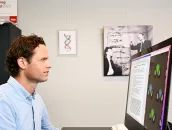
Future of data storage lies in DNA microcapsules
Within five to 10 years, we will be able to store data in DNA, Professor Tom de Greef expects. Data will not be stored in zeros and ones on a hard disk, but in the base pairs AT and CG that make up DNA.

Climate index highlights vulnerability of regions for more targeted policies
Climate change affects every country, but some regions will be hit harder than others. This involves not only emissions and precipitation, but also various socio-economic factors.
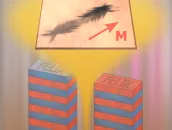
Order from chaos: how magnon-polarons organize themselves
Researchers from HFML-FELIX laboratory have discovered that the long-accepted, proclaimed speed limit for magnetization reversal, might not be as set in stone as it was thought to be. About finding order in chaos.

Nitrogen also affects soil invertebrates and insects
Higher levels of nitrogen in the environment not only affect plants but also soil invertebrates and insects. What is more, climate change may amplify the negative effects of nitrogen. This is the conclusion reached by researchers from Radboud University.

Social media data provides first glimpse at increased popularity of air conditioning worldwide
Through social media advertising data, we get a first glimpse of what drives and motivates people to buy air-conditioners worldwide, new research led by Sibel Eker from Radboud University shows.

Grant for research on sexual violence and female empowerment in medieval Dutch and French songs
Assistant professor Cécile de Morrée, affiliated to the Radboud Institute for Culture and History (RICH), has received an NWO Open Competition XS grant for her research on medieval Dutch and French songs about sexual violence and female empowerment.

PhD candidates Klara Raiber and Michelle Jansen received a Christine Mohrmann Stipend
PhD candidates Klara Raiber and Michelle Jansen received the Christine Mohrmann Stipend, encouraging them to pursue their scientific careers after completing their dissertations.

IRP Voucher Call 2024 (closed)
In total, 12 vouchers with a maximum of 50,000 euro will be granted to stimulate novel research lines connecting two or more institutes within the Faculty of Science.

The human tendency to help exists in all cultures
People from different cultures are more alike than we first thought. All over the world, people tend to respond to requests for help and help others. This is the conclusion of a new linguistic study in which several Radboud University researchers collaborated.

ERC Grant for Making Sense of the Senses
Uta Noppeney has won an ERC Advanced Grant for her project entitled ‘Making Sense of the Senses: causal inference in a complex dynamic multisensory world’.

Reports of neighbourhood conflicts give voice to people of Sri Lanka under VOC administration
In his PhD research at Radboud University, historian Luc Bulten discovered that not only the VOC made use of the Sri Lankan registers; the registered persons also used them to their own advantage, for example in conflicts between neighbours.

From Romance to Racism: Exploring fan responses to anti-racist criticism of 'Gone with the Wind'
The film classic Gone with the Wind (1939) has long been criticised for its controversial content. The Radboud Institute for Culture & History examines the experiences of fans, in the context of a recent wave of anti-racist objections.

The diversity of present tree species is shaped by climate change in the last 21,000 years
A global survey of 1000 forest areas shows how past climate change has had a major impact on the diversity and distribution of tree species we see today. The results can help us predict how ecosystems will react to future changes.

People are open to algorithms (if they benefit from them)
A new publication in AI & Society by Radboud University researchers shows that humans are quite open to algorithms’ decisions, as long as we believe that this is to our benefit.

How do you recover trust in government after a civil war?
In this kind of situation, development agencies must be very careful that interventions do not undermine the legitimacy of existing forms of land governance.
CLARIAH awards Heritage Data Grant to create historical database of 19th century Paramaribo
CLARIAH has rewarded a Heritage Data Grant for the realization of a database of the Paramaribo ‘ward registers’. This source preserved for the period 1828-1847 provides a insight into the life in a colonial city during the last decades of slavery.

Growing cells on synthetic PIC gel could save millions of mice
The synthetic PIC gel, discovered in 2013 at Radboud University, seems highly suitable to grow cells in for research. An additional advantage is that unlike the gels commonly used for cell culture, this gel requires no breeding and killing of mice.
ARPH dissertation award for Inge Stortenbeker
For her research on doctor-patient communication about complaints and symptoms that cannot be explained, Inge Stortenbeker recently received the 2022 Dissertation Award from the Association for Researchers in Psychology and Health (ARPH).