Every nursing home is different: the role of the organizational form in COVID-19 infections and deaths
Flemish nursing homes that work with smaller residential groups that have permanent healthcare teams have had noticeably fewer infections or deaths related to COVID-19. This is true not only of the residents, but also the personnel. This was the conclusion reached by researchers from KU Leuven and Radboud University.

Contact with others who suffer from depression is effective
People with depression benefit from contact with fellow sufferers. Such contacts can in fact contribute to recovering from depression. That was shown in the PhD research done by Dorien Smit, who will defend her thesis at Radboud University on 1 December.
Bees as inspiration for better hearing implants
You’re at a party and everyone is talking at the same time. It takes effort to filter out the voice of the person you’re talking to. It’s quite the feat for people with perfect hearing, so imagine what it’s like for people who are hearing-impaired.

ERC Starting Grants for six research projects, including bullying, AI and brain mechanisms
Six researchers at Radboud University receive a Starting Grant of the European Rersearch Council (ERC). This 1.5 milion euro grant gives them the opportunity to form their own research groups.

Volunteer support for people with financial problems is effective but “the problems are sometimes too complex”
People with financial problems can often get support from volunteers. On 24 November, Jansje van Middendorp will receive her PhD for her research into the effectiveness of that support.

Radboud Radio Lab and ATG Engineering work together for ESA lunar mission
Radboud University’s Radboud Radio Lab and the technology company ATG Europe will work even closer together to build a radio telescope on the dark side of the moon.

Archaeology, neuroscience, and robotics join to investigate robots that invent tools
The METATOOL project received 4 million euros from the European Innovation Council (EIC) and the ‘Awareness Inside’ Pathfinder Challenge to investigate how robots can invent new tools as ancient humans did.

Educational innovation project You have a part to play starts off with bachelor’s programmes
This month marks the launch of the Comenius project You Have a Part To Play: Higher Education for Sustainability. The aim of this project is to develop teaching methods and learning tools to give the United Nations' 17 Sustainable Development Goals.

New book on climate change and the American tropics
In his newest book, professor Michael Boyden explains how we came to think of the climate as something abstract and remote rather than a force that actively shapes our existence.

New view on the brain: It’s all in the connections
It’s not the individual brain regions but rather their connections that matter: neuroscientists propose a new model of how the brain works. This new view enables us to understand better why and how our brains vary between individuals.

'Remembering Holland is actually more about Gelderland'
Het verhaal van Gelderland (The Story of Gelderland), edited by Dolly Verhoeven, will be published on 10 November. 'Few Gelderlanders feel a real Gelderland identity, even though there is plenty that connects us '

Physician’s positive language use reduces anxiety among patients with unexplained symptoms
General practitioners regularly see patients with persistent physical symptoms (PPS) that have no clear explanation. But researcher Inge Stortenbeker found that a physician’s use of language and choice of words can influence how anxious patients get.

No evidence as yet that people exercise less after office work
After a busy day at the office, many people collapse onto the sofa instead of getting some exercise. Sven van As explored the mechanism behind this phenomenon. “When we feel stressed or tired, we tend to go for the easy option."

Submerged plants reduce greenhouse gas emissions from shallow lakes and ditches
Shallow lakes and ditches emit less greenhouse gases if rooted submerged plants are predominant instead of free-floating plants or algae. The researchers recently published their findings in the journal Water Research.

'We have to look beyond ethnicity'
Hanna Carlsson, researcher at the Department of Geography, Planning and Environment, wrote a PhD-thesis about how care practices respond to the needs of older migrants in Nijmegen and The Hague.
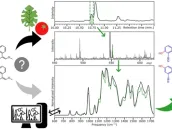
Characterizing agrochemical transformation products with Syngenta
Researchers at HFML-FELIX and Syngenta (Jealott’s Hill International Research Centre) have used FELIX to demonstrate the differentiation of hydroxylated derivatives of two plant protection compounds contained at low levels in relevant plant matrices.

Opinion: Is reducing consumption the ultimate solution?
Radical solutions are needed in order to combat further climate change — this is nothing new. But who should make the first move and how remains unclear. Two young economists discuss.

Knowledge exchange crucial for good youth care
Interview with Jan-Kees Helderman and Corina Brekelmans about the transformation of the youth care.

Global Data Lab is ready for the future
“A pearl,” Jeroen Smits calls it. “A hidden treasure,” says new director Natascha Wagner. Global Data Lab (GDL) occupies a unique position in researching developing countries. The lab’s survival and expansion are now guaranteed thanks to a financial

New version of Letter Prince: a game to teach children to read better
Friday 14 October 2022 was the launch of a new version of the ‘Letter Prince’ reading app, an online game that teaches children to read or improve their reading skills.