
Research projects
-

Disruptively green neuromorphic scientific computing leveraging stochasticity
We will develop algorithms for neuromorphic hardware with computational material science as a use case. This will create more fundamental knowledge on next-generation materials for neuromorphic hardware.
-

Sit with a scientist in the 'Walking park'
The ‘Walking Park’ is a pop-up park that moves to a different spot in the city center every three months. The new video series "Sit with a Scientist" is connected to the pop-up park.
-

ASTRAL: Novel technologies for data transfer
ASTRAL will exploit the exclusive ability of light to initiate ultrafast spin dynamics and will attempt to interconvert femtosecond laser pulses into large-amplitude ultrashort SW pulses.
-

Preclinical development of antiviral COVID medicine
Researchers at the Synthetic Organic Chemistry group at Radboud University and spin-offs Protinhi and Artemis are developing an antiviral molecule medicine against COVID-19.
-
The Power of Size
This project looks at chemical pollution, one of the fastest growing environmental problems in the world. The project derives relationships for parameters that determine the emission, fate, accumulation and effects of substances.
-

Radboud Consortium for Glycoscience
The Radboud Consortium for Glycoscience is a collaboration between different research groups of the Radboud University to engage in the field of glycobiology.
-

Understanding and preventing the impact of endocrine disruptors on the hypothalamus-pituitary axes in sensitive populations
The HYPIEND project examines the effects of endocrine disrupting compounds (EDCs) on the stress, reproduction and thyroid endocrine systems besides implementing strategies to minimalize the exposure to EDCs in sensitive populations.
-

Disapeer: The reconfiguration of peers in editorial review
An investigation into the transformative developments of editorial review at scientific journals, analysing the use of automation and artificial intelligence in the assessment of submitted papers and selection of reviewers.
-

COMRAD: optimal magnetic switching for greenest random access devices
The COMRAD projects focuses on developing and fabricating a cold optomagnetic memory device for greener data centres and super-computers. COMRAD aims to demonstrate how to decrease the dissipated heat in data storage at least by a factor of 10.
-

Copper-Catechol Synergy for the Development of an Energy-Dense and Long-Lived Redox Flow Battery
The project aims to develop a new generation of copper redox flow battery that have a long lifetime (>20 years) and higher energy density than the state-of-the-art copper redox flow batteries.
-

Operando NMR methods for studying electrochemical ammonia synthesis
This project seeks to develop and apply new nuclear magnetic resonance (NMR) methods to understand electrocatalytic reaction mechanisms. NMR is a non-invasive, atom-specific, and quantitative spectroscopic method.
-

Remote NMR (R-NMR)
Remote NMR (R-NMR) is 3 years project by 26 European NMR groups/entities that aims to design and deliver a platform for remote access capabilities to Nuclear magnetic resonance (NMR) Research infrastructures (RIs).
-
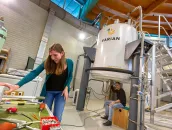
DPI HYPERFAST
The main objective of this proposal is to capitalize on two important methodological developments that can remedy shortcomings of NMR for studying complex polymer systems.
-

FuRoRe: Foundations for Robust Runtime monitoring
This project focuses on enhancing the control mechanism of autonomous systems, specifically runtime monitors, in uncertain situations.
-

GELSONDE: gaining better understanding of nitrogen dioxide
The GELSONDE project brings together a team of materials chemists and sensor specialists who are joining forces to create a new, low-cost, and portable sensor.
-

GREENFRUIT: energy efficient fruit quality monitoring
The project team will advance the research & development activities to the next level. They focus on providing solutions reducing storage energy consumption by promoting green and energy efficient fresh fruit storage & sustainable agriculture
-

Are glycans crucial determinants of autoantibody reactivity in multiple sclerosis?
In this pilot project the role of glycosylation in the autoantibody response in MS will be unexplored.
-

Functional characterisation of the human sialyltransferase isoenzyme family
The project aims to decipher the specific functions of individual STfs isoenzymes to elucidate their biological roles which could warrant further investigation into their roles in diseases as inflammation where glycosylation changes are described.
-

Genetic and chemical engineering of sialoglycoproteins in human cells
This project is focused on the use genetic engineering and chemically-modified sugar building blocks to dissect the biosynthetic network of glycosyltransferases.
-

Epithelial glycosylation in the human colon and cross-talk with the microbiome
Glycosylation will be studied in vitro with 2D and 3D models, and by using techniques like omics and CRISPR-Cas. This will be done in healthy and diseased settings.