
Research projects
-

Todesfuge
Cultural studies researchers, linguists and didacticians have worked with secondary school teachers to develop teaching materials which transcend subjects, based on research into the effect of Paul Celan's poem 'Todesfuge' (1945).
-

Germanistische Institutspartnerschaft (GIP)
The GIP project builds on the trilateral cooperation in research and teaching in the field of German as a foreign language that has been cultivated for many years.
-
Towards a Virtual Slave Island
Downtown Colombo has been one of the fastest-growing cities in South Asia. This project moves beyond the changes in the built environment, by foregrounding the untold life stories of past and present inhabitants of the suburb.
-
Travelling War Memories
In this project (2018-2023), Aomi Mochida explores the interplay of remembering and forgetting surrounding WWII sites in Japan with connections to wartime Japanese perpetration.
-

Word meaning without the sense of smell
This project will directly assess the critical role of olfaction in word meaning by exploring smell- and taste-related language in individuals without a sense of smell (i.e., anosmics) and comparing them to controls with an intact sense of smell.
-

Uses of literature in the classroom
This project explores how the value of literature is negotiated in upper-secondary literature classrooms.
-
Asset management after the Second World War
In the first years after the Second World War, the Nederlands Beheersinstituut (Netherlands Property Administration Institute) (NBI) managed hundreds of millions of guilders in assets on behalf of the Dutch government.
-

Viabundus
Viabundus provides an open-source available, digital map of long-distance routes in Northern Europe (ca. 1350-1650) and other relevant information.
-

Waalpaintings
Waalpaintings aims to make Nijmegen's rich history visible again in a series of fifteen murals at locations in the inner city.
-
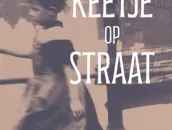
Neel Doff’s translingual urban wanderings
This project researches the reception of Neel Doff's Keetje trilogy and her position as a transnational author.
-

Mirror of mutual relations
This project studies the development of urban networks in the Cologne region around the rivers Rhine, Meuse, Waal and IJssel and their relation to Hanse.
-

Maurits Wagenvoort
In this biographical project, funded by the Nederlands Letterenfonds, Floris Meens will study the life and work of the Dutch essayist, playwright, novelist and travel author Maurits Wagenvoort (1859-1944).
-

Mapping the Via Appia
The research project ‘Mapping the Via Appia’, aims at a thorough inventory and analysis of the Roman and later interventions in the suburban landscape.
-

Making a martyr in medieval Iberia, 589-1080
This project will examine how liturgical sources communicated the ideal of martyrdom but always in dialogue with material evidence.
-
Limes and Legion
For most of the existence of the Western Roman Empire, the river Rhine served as its northwestern boundary. Legionary fortresses, auxiliary forts and watchtowers were scattered along the left bank, from Remagen in the south up to the North Sea coast
-

Lifting the burden of disease. The modernisation of health in the Netherlands: Amsterdam 1854-1940
As the current corona crisis shows, the history of infectious diseases in western societies is far from over. However, we had somehow forgotten about that heavy burden of infectious diseases in the past, how heavy it was, and what it looked and felt.
-

Integration and Social Mobility: The Descendants of Early Modern Immigrants in Amsterdam, 1660-1811
This project addresses one of the major questions in Dutch migration history: what happened to the descendants of the hundreds of thousands of Germans, Flemings and Scandinavians who migrated to the Dutch Republic in the early modern period?
-

HIP-NL: A Historical Income Panel for the Netherlands
This project will create a unique large-scale historical income panel for 200,000 individuals in the Netherlands between 1851 and 1922.
-
Faithful friends and filthy foes. A sensory and emotional history of human-animal interactions in Amsterdam (1840-1930)
In the context of climate change, decreasing biodiversity, bio-industry and pandemics, the question how humans do, and should, coexist and interact with animals – from cute pets and loyal beasts of burden to future meat and dangerous pests
-
Fair and reasonable
The reasonable exchange of arguments in parliament nowadays seems to be at odds with the accessibility of democratic decision-making. Debate procedures are often seen by the people as elitist and undemocratic.