
Research projects
-

Empirical foundations of poetic rhyme
The research project uses methods from experimental psychology and psycholinguistics to address fundamental questions about rhyme that have gone unnoticed in prior research.
-

Democratic innovations & populism: For better or worse?
This project of Dr Kristof Jacobs investigates the effects of democratic innovations (e.g. citizen-initiated referendums, participatory budgeting and citizens’ assemblies) on populist citizens.
-

N-SAFE
The N-SAFE project examines the newly emerging role played by non- governmental organisations (NGOs) as they partner with governments around the world in the global fight against illegal fishing.
-

Tracing Syrian Refugee Return Dynamics across South/North Divides
This multidisciplinary project examines the connections between European return decisions.
-

(De)legitimation and international order
In this project, with funding by the GLOCAL hotspot, we are constructing a new dataset on the (de)legitimation of international order that will allow us to close these conceptual and empirical gaps.
-

Constructing Neoclassical Realism
This project seeks to explore and critically reflect on the politics of contemporary neoclassical realist (NCR) theorising in International Relations.
-

Populism and Political Parties Expert Survey (POPPA)
The Populism and Political Parties Expert Survey (POPPA) dataset measures positions and attitudes of over 250 parties on key attributes.
-

EU Solidarity and Risk-sharing During COVID-19
This project examines the conditions under which European citizens support international cooperation in controversial policy areas.
-

Forming a more active attitude through blending learning
The first-year psychology course ‘Methods of Professional Conduct’ is supposed to help form a scientific attitude, but does this insufficiently. Linda Kwakkenbos and Ilianne Boumans are researching whether blended learning could offer a solution.
-

Adding depth to problem-oriented education
The bachelor’s programme Pedagogical Sciences offers courses based on problem-oriented education. Students perceive these as positive, but want more depth. Marianne van den Hurk and Noortje Janssen are researching how this can be realised.
-

Social connectedness after the covid pandemic
Because of covid, students have lost a lot of social contact and interconnectedness. This has negatively impacted their wellbeing and network. Jana Vyrastekova and her team are researching whether this can be restored with plenary meetings on campus.
-

Personalised coaching for Biomedical Sciences students
Students of the master's Biomedical Sciences master’s go through a coaching track to help their professional development. This track is currently not running optimally. That is why Van der Waart and Davidson are researching how this can be improved.
-

SPRINT
The focus of SPRINT is intonation, the modulation of voice pitch. Intonation is essential for communication, as it conveys information that helps listeners make inferences about the intent of the speaker.
-

Dutch morphologically complex words
The goal of this project is to obtain more information about the role of morphology in general and of morpho-phonetic traces in particular in speech processing.
-

The SignON Project
SignON is a user-centric and community-driven project that aims to facilitate the exchange of information among Deaf, hard of hearing, and hearing individuals across Europe.
-

HoMed (Homo Medicinalis)
HoMed (Homo Medicinalis) will implement a SSH research infrastructure with an enormous potential for automatic transcription of sensitive audio-visual (AV) recordings.
-
The body in language use
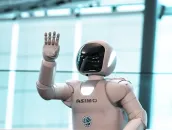
Using a Conversation Analytic approach, this project inductively investigates what signals humans make relevant while interacting with a robot for the first time.
-

Deep Learning Across Languages
This research project will investigate what determines successful learning of grammar by neural networks, and conduct this investigation with various languages differing in word order and morphological complexity.
-

Actual Fictions
Actual Fictions analyses a series of 5 large scale corpora of Dutch language novels ranging from the 1900s up until the 2010s. The project focuses on the extent to which the Dutch novel has transformed in light of a range of emancipatory movements.
-

For Future Generations
This research develops a framework to understand the role of digital platforms as shaping actors in our thinking about the environment.