Aquatic Ecology
Aquatic Ecology

Radboud Institute for Biological and Environmental Sciences

The Radboud Institute for Biological and Environmental Sciences (RIBES) aims to perform world leading research in order to understand the response of the natural environment to human impact. With this knowledge, the institute contributes to mitigating ecosystem degradation and finding solutions to restore the natural environment.

Highlights

Visualisation of argonaute

Study reveals unified origin of life’s antiviral defenses

Dr. Pedro Leão, a new researcher at RIBES, combined protein lineage research with AI-powered protein structure prediction, showing that some proteins involved in our immune system evolved from an ancient common ancestor.

Fabrieken die CO2 uitstoten

Climate Council advises government: Act decisively and with policy on CO2 removal to meet climate goals

Active government action is needed to remove CO2 from our atmosphere. The Scientific Climate Council (WKR), of which Radboud University's Heleen de Coninck is deputy chair, argues that the government should focus policy on permanent CO2 removal.

Scholekster op een kwelder

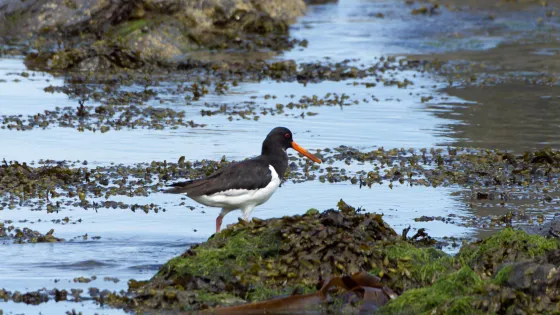
Rising sea levels spell danger for shorebirds such as oystercatcher

Research shows that rising sea levels will drastically reduce the number of shorebirds in Europe. The number of oystercatchers will decline an additional 56 to 79 percent over the next 100 years.

Visiting address

Radboud Institute for Biological and Environmental Sciences is located in the Huygens building in Nijmegen.

Heyendaalseweg 135
6525 AJ Nijmegen

Contact

Get in touch with the research institute by contacting the RIBES office. Or follow us on Twitter/X, Mastodon, Bluesky, and LinkedIn.