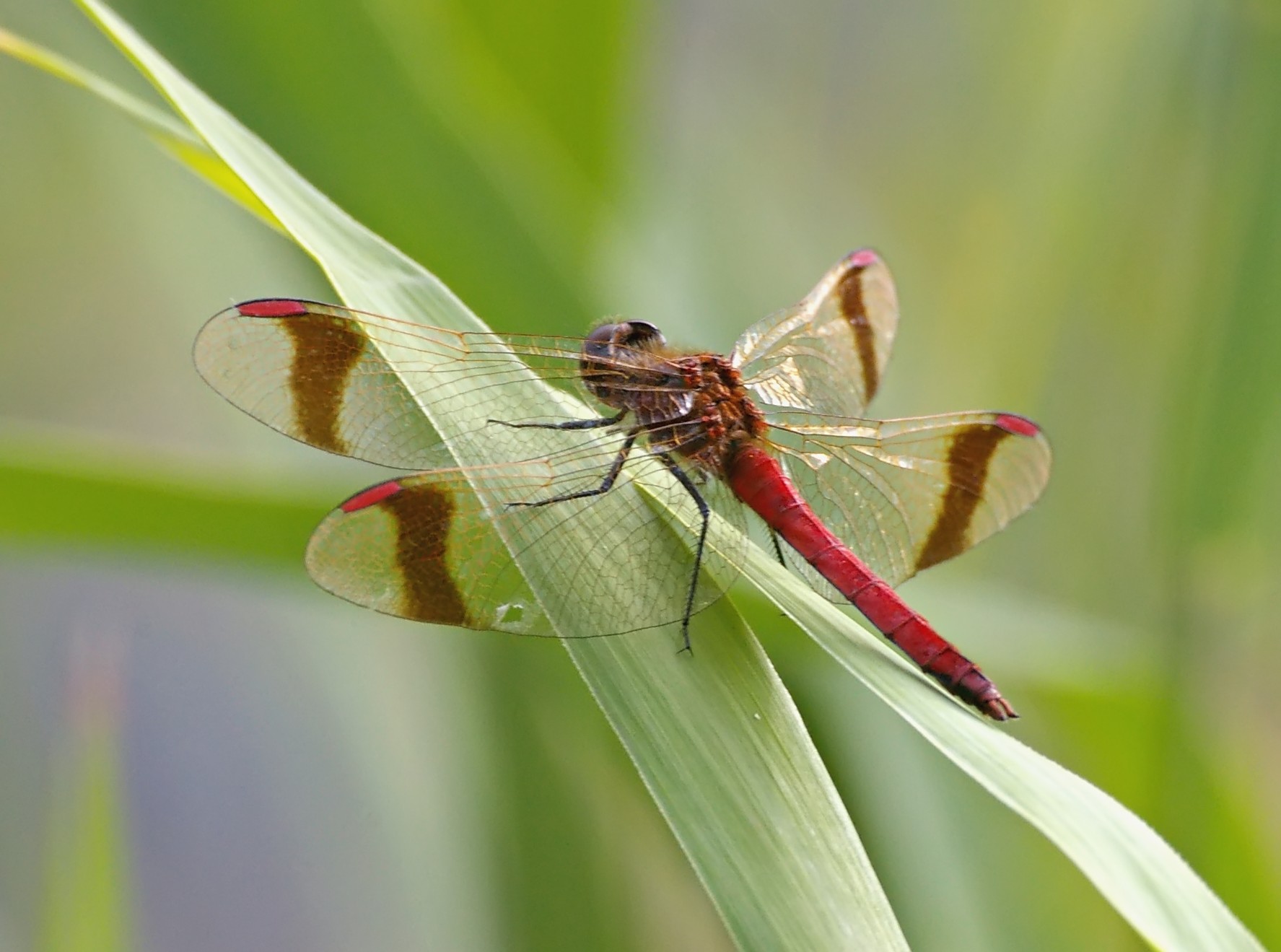


Of course, you could wander through a unique forest or travel to a spectacular wildlife area to watch rare birds of prey. However, as an amateur field biologist, you could also search nearby for hoverflies, dragonflies and common garden plants. Nijmegen native Sander Turnhout believes that common species are also unique. “Go out and search and discover.” With his guide, he aims to teach others how to recognise wild plants and animals, to show them how a wildlife area is formed and how easy it is for people to carry out their own field work.
There are already at least 100,000 active and enthusiastic observers in the Netherlands, many with decades of experience. “They’re the real experts. And their observations are extremely valuable. Some of these people have also participated in regulated counting projects, which has a lot of added value. Many amateurs do report sightings of a griffon vulture if they’ve seen it, but it’s vital that we also see trends in the more common species. This means, for example, that you’d have to walk the same route seven times a year and subsequently count all of the ‘common’ insects and plants that you encounter. From a statistical point of view this provides very useful information, but it’s also important to experience nature itself.”
Radboud University also home to unique species
It is in Park Heyendaal, right next to the university grounds, that Turnhout wants to illustrate how valuable each facet of nature can be. He has a magnifying glass around his neck and an insect net at hand. When he sees an insect sitting on a plant, he uses a rapid rotating arm movement and captures it in his net. “Unique species have been observed in the Radboud University grounds. Did you know that tawny owls have nested here and that the vagrant emperor dragonfly and banded darter dragonfly have also been sighted?”
He noticed that there was a considerable increase in people’s interest in the great outdoors during the year of the coronavirus. In the run-up to the publication of his book, he was involved in a ten-part online course entitled ‘Recognising Plants and Animals’, in which ten nature clubs participated. “No fewer than 1,600 people paid to take part in the course. Participants were aged between 8 and 88 years of age and ranged from secondary vocational training students to people with a PhD. Species recognition is no longer a part of the Bachelor of Biology programme, so even the graduates learnt quite a lot. I’ve been tweeting the contents of my book all year, and have given people a sneak preview on @soortvandedag, on Instagram and the SoortenNL Facebook page and on my own LinkedIn page.”
Turnhout wrote a field guide in 2000, but a lot has changed since then. “It’s not only new species that have been added, but also many new techniques. Back in 2000, people were still using binoculars. And back then you also had to use a book to look up what you’d seen. Now there are apps like ObsIdentify, which show you exactly what’s in front of you.” And there are also specialist shops like Vermandel, where you can buy hundreds of different things like range finders, trapping materials, bat detectors and night-vision goggles.
‘Sifting through owl pellets? Fantastic!’
It was during a visit from the Young Nature Watch at primary school that Turnhout fell under the spell of the natural world. "Sifting through owl pellets? I thought it was fantastic!” As a 12-year-old he joined the Dutch Youth Association for Nature Study (NJN) and he still continues to be involved in their activities. He works at the SoortenNL nature network and is Strategic Advisor at Radboud University’s Healthy Landscape.
“I’m not a biologist; I actually studied Dutch language and literature. I have a PhD in social sciences which I obtained with a study into nature monitoring, for which I used the rediscovery of the River Clubtail in Nijmegen as a case study. Everybody believed that this type of dragonfly had all but disappeared from the Netherlands until its larva was found at a power station in 1996. At the time, the stories about the River Clubtail were filled with gloom and doom: it was widely accepted that this was the next species to become extinct worldwide. After the dragonfly was rediscovered in Weurt in 1996, people explained it away as a freak accident; probably a hitch hiker on a ship from Eastern Europe. However, two years later two more larva were found and then some amateurs start looking in the field, where it turned out to be present in in almost all of the Dutch Rivers, sometimes in large numbers.”
Nature management is not working in the Netherlands
Turnhout is concerned about the reduction in the number of species. “We’ve seen that people are spending more and more time outdoors. There’s much to be said for restoring the contact between man and nature, especially now that we’re dealing with the biodiversity crisis. Nature management is not working in the Netherlands. We’re designating natural areas, but we’re not really doing much more than that. Backyards and parks also contain natural habitats. Why is there always this same regulation frenzy? And we shouldn’t only be focusing on the rarer species but also on their natural surroundings. The European honey buzzard will struggle if there are no wasps to eat, which means that we should be focusing on restoring the wasps’ habitat. Thanks to our neatness syndrome, we feel that every single patch of grass needs to be regularly mowed. And what’s the purpose of that when it only costs money and destroys nature.”
Photo: bandheidelibel via Wikimedia Commons.