
The department of Biomolecular Chemistry (part of Institute for Molecules and Materials) focuses on the molecular basis of autoimmune diseases, such as rheumatoid arthritis. The research carried out in our department is focused on the molecular aspects of cellular stress and regulation of glycosylation in the context of inflammation and autoimmunity. The department also studies the molecular mechanisms underlying the loss of immunological self-tolerance.
Biomolecular Chemistry
Department
Highlights

Research
Characterisation and function of autoantigens
Patients suffering from autoimmune diseases produce antibodies to self-proteins, which are referred to as autoantigens. In general, such autoantigens are macromolecules which have important cellular functions. We study the structure and function of autoantigens involved in the synthesis and degradation of RNA and proteins.
We also address the question of why tolerance to self-proteins is lost in autoimmunity. Our studies are based on the hypothesis that unusual post-translational modifications play a role in the generation of autoreactive antibodies, and we believe that such modifications play an significant role in the initiation of autoimmunity. The knowledge obtained on the structure and modifications of autoantigenic molecules is used for the development of autoimmune diagnostics.
Dissecting cellular glycosylation in health and disease
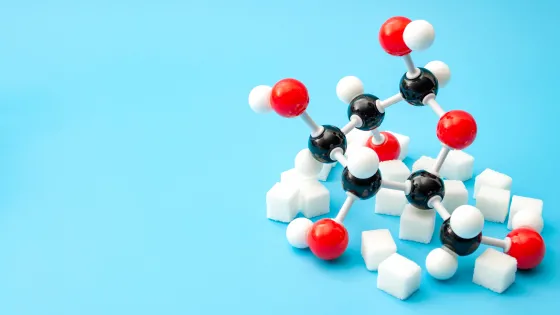
Next to nucleic acids, proteins and lipids, glycans are the major molecular building blocks of the cell. Glycans are composed of different sugar molecules that are assembled inside the cell into a staggering repertoire of highly diverse structures – the glycome. Glycans regulate the biochemical properties and functions of glycoproteins and glycolipids, and mediate numerous molecular recognition events at the cell surface. Altered glycosylation is found in every major disease, including inflammation, autoimmunity, and cancer. We study how glycosylation contributes to the normal functions of a cell and how it is altered during molecular stress and in disease.
Publications
The scientific contributions of researchers of the department can be found in the Publications archive in Radboud Repository.
Education
Our staff is involved in a range of educational activities at the Faculty of Science of Radboud University, and the Radboudumc. We contribute to a variety of Bachelor's and Master's courses like: DNA Technology, RNA Structure & Function, Biochemistry, Essentials of Biochemistry Lab, Biochemistry Lab, Advanced Molecular Biology, Omics, Apoptosis, Cell Death in Life and Disease.
Internships
The department offers internship opportunities, especially for Bachelor's or Master's students in Molecular Life Sciences, Chemistry, Science, Molecular Sciences, and (Medical) Biology. For more information, please contact the department.


Academic staff
Below are the academic staff of the Biomolecular Chemistry department. Group leader is Prof. Ger Pruijn.


Contact information
Location
Visiting address
Heyendaalseweg 1356525AJ Nijmegen
Postal address
Postbus 90106500GL NIJMEGEN