
Recharge overview

Media stories inspire young people to help during the pandemic
During the Covid pandemic, media stories have been proven to inspire young people to help others. Helping others also often gave them a feeling of satisfaction. This is the conclusion of researchers from Radboud University and Erasmus University Rotterdam in a newly published article.

Explosive neutron star merger captured for the first time in millimeter light
Scientists using the Atacama Large Millimeter/submillimeter Array (ALMA)— an international observatory co-operated by the US National Science Foundation’s National Radio Astronomy Observatory (NRAO)— have for the first time recorded millimeter-wavelength light from a fiery explosion caused by the merger of a neutron star with another star. The team also confirmed this flash of light to be one of the most energetic short-duration gamma-ray bursts ever observed, leaving behind one of the most luminous afterglows on record. The results of the research will be published in an upcoming edition of The Astrophysical Journal Letters.

Reduction of methane emissions from lakes possible with new approach
Lakes and other freshwater systems emit large quantities of methane, which is the second most important greenhouse gas worldwide after CO2. Dredging and the use of Phoslock (a phosphate-binding clay particle) can reduce these lake emissions by over 50%. This is the conclusion of a study by Radboud University researchers.

‘Simple things are often the hardest’
Rarely do internships culminate in a successful business model as quickly as it did for Liza Luesink and Joyce Croonen with their consulting agency, Duwtje, which translates behavioural change theory into recommendations for a better world. ‘The best solution is so logical that everyone thinks: Why didn’t I come up with that?’

Adults experience ADHD too
ADHD is not just common in children but also in adults, writes Ping Chen in a new Donders Wonders blog.

How elephants adapt to human development in cities versus farm life
The movement of elephants through wildlife corridors is directly impacted by differing forms of human pressures and development, new research by Elephants Without Borders (EWB) and Radboud University shows. Their study, published today in Frontiers in Conservation, is the first that takes an in-depth look at how varying land-use affects elephants and their use of wildlife corridors.

‘Christianity cannot justify war’
Alfons Brüning, director of the Institute of Eastern Christianity, tells us that Ukraine is characterised by its ability to exist between different worlds. ‘That ability is precisely what is being lost now.’

Coffee naps are more effective than regular naps
A ‘coffee nap’, which is just drinking a cup of coffee and then taking a nap, supposedly makes you feel a lot more energized than a coffee or a nap alone. I have tried and absolutely love it. But how does it actually work?

Envision your future – an approach to quitting smoking
Individuals with substance use problems, such as excessive smoking, tend to prefer instant gratification rather than delayed gratification. They are aware of the ill effects but find it challenging to quit.
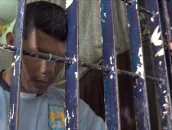
How Roberto Hernández had to flee the country because of a documentary
With his film 'Duda razonable' director Roberto Hernández challenged the powerful Mexican authorities. He had to flee to the Netherlands and now lectures at Radboud University as artist in residence.

Researchers in Svalbard: 'Landscape has changed beyond recognition'
Earlier this month, a ship full of scientists left for Svalbard, an archipelago in the Arctic, for research. Aquatic microbiologist Annelies Veraart of Radboud University was one of the scientists on board for the inspiring and confrontational expedition. 'Fewer and fewer polar bears find a place on the melting pack ice.'

Spatial planning experts examine “colouring pages” of energy regions
In order to meet the Climate Agreement goals, the Netherlands wants to generate more and more sustainable energy. Thirty energy regions are translating the energy ambitions into concrete projects such as solar fields and wind farms. How are these regions doing this? Which factors determine the ultimate strategy? PhD candidate Martijn Gerritsen and assistant professor of Spatial Planning Henk-Jan Kooij are researching this.

Do fish suffer from oxygen starvation?
Larger fishes are more likely to experience oxygen deficiency in warming water than smaller species. The same applies to fish with large cells, note researchers at Radboud University in their latest study. In addition, marine fishes are less tolerant of oxygen-depleted water than freshwater fishes. Based on these insights, the researchers ultimately aim to predict which aquatic species are at risk due to changes in their habitat caused by global warming and human activities.

Summertime headache: The brain freeze explained
To prevent the brain from getting too cold, extra blood is drawn to your head, which can hurt.

Do insects help 4Daagse runners to recover?
During the 4Daagse, which will take place again for the first time since 2019, the Radboudumc is investigating whether walkers will benefit from swallowing ground protein-rich insects. It is known that animal proteins contribute to recovery after exercise, but the researchers want to find out whether proteins from insects can do this just as well.

‘We still do not really know what Putin wants’
A quick way out of the conflict in Ukraine? Bertjan Verbeek, professor of International Relations, thinks that’s an illusion. ‘I am afraid that it will be very difficult to find a permanent solution.’

4Days Marches tips: Four ways to beat the heat
The Vierdaagse week has a chance of reaching tropical temperatures. How can participants best deal with this? Exercise physiologist Thijs Eijsvogels has come up with four tips. ‘Check the colour of your urine every now and again.’

What is Nothing?
Thinking about Nothing - is that possible? Philosophers throughout the ages have at least given it some thought. Their ideas about what Nothing is, say something about their time and their world view. And also about the fragility of human existence. Because 'nothing more' or 'nothing yet', that makes a difference. In a series of articles prompted by reader questions, we will be looking for an answer to the question: 'What is Nothing?'
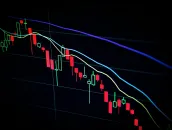
Crypto: hype or currency of the future?
When friends without any economic knowledge suddenly stock up on Bitcoin for thousands of dollars and even your grandparents start talking about crypto coins on birthdays, it's safe to say there's hype. But what is behind the hype? And to what extent do cryptocurrencies have the future? We asked Stefan Zeisberger, professor of financial economics at Radboud University.

Solar cells are not a waste of energy
Do solar panels provide more energy than is put into them? Solar cell researcher John Schermer from Radboud University: 'If solar cells were not so promising, then there would not be as much global research into them.’