
Recharge overview

The new way of working (from home)
Working from home is challenging, but it can teach you to be very efficient by working in short cycles, taking good breaks, and by integrating work and private life instead of separating them.

Tackling cancer with radioactive particles
Tackling cancer with radioactive particles, administered to patients through an infusion, that target only malignant cells while leaving healthy tissue unaffected. After surgery, chemotherapy, external beam radiation and immunotherapy, this has been increasingly used in recent years. But before it gains the same status as all these other therapies, much more knowledge is needed. One of the researchers focusing on this is Sandra Heskamp, professor at the department of Medical Imaging.

Why your beliefs are false
We are overwhelmed with data and opinions. The news on TV, the buzzy notifications on your phone, the random chat we heard at the cafe. It is a train of information and it doesn’t seem to stop. Yet, how often do we question the truth of this information?

On safari in your local park
The Dutch have discovered the great Dutch outdoors. The Basisboek Veldbiologie [Basic Guide to Field Biology], which was written by Nijmegen local Sander Turnhout (Strategic Advisor at Radboud University’s Healthy Landscape) provides everyone with the opportunity to go on a safari, even in their local park.

Freedom of expression: let’s get less legal and more concrete
The discussion about freedom of speech often revolves around our legal right to express ourselves. This is understandable and necessary, especially in times when Capitols are being stormed and politicians, Dutch ones anyway, ask the crowd whether they’d like more or fewer Moroccans and smiling complacently when the crowd chants “less! less!” in response.

Reality is merely an illusion, albeit a very persistent one
We think of our perception of the world as universal ground truth, but it’s not. How fascinating it is to realize that the way the environment shapes our perception, depends on the sensitivity of our sensory system!

The current education system is still bankrupt
Although his indictment of the education system caused a stir in 2019, little has changed since then, says philosopher Jan Bransen. A revised English edition of his book Gevormd of vervormd? [educated or deformed], which can be accessed worldwide thanks to Radboud University Press, may offer a solution. ‘There is an undercurrent of educational innovation that this book will hopefully feed into.’

Do you “Déjà vu”?
It happens when we feel as if a particular moment has already occurred in the past. Any sensation such as a sight, a sound, or a smell can trigger a sense of familiarity, as if it belonged to some previous experience. This phenomenon is best-known as déjà vu, a French word that literally means “already seen”.

Increase your brainpower
Wouldn’t it be nice if we could outsource tedious chores? What if we could also do that with cognitive tasks, such as complex calculations?

Shielding ultracold molecules with microwaves
Ultracold molecules are promising for applications in new quantum technologies. Unfortunately, these molecules are destroyed upon colliding with each other. Researchers at Harvard University, MIT, Korea University and Radboud University have demonstrated that these collisional losses can be prevented by guiding the interaction between molecules using microwaves in such a way that they repel each other and, therefore, do not come close to each other during collisions.
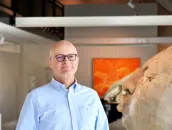
‘A career switch has greatly enriched my life’
There is more to life than the legal profession, Leonard Verburg thought. That's why, at 55, he swapped a top job in the Amsterdam financial district (Zuidas) for a professorship at Radboud University. ‘I enjoyed showing students the bag of tricks lawyers use, but I always said: you mustn't use these.

The growing resistance against mandatory health advice
For some time now, the widely promoted healthy lifestyle has not only been called into question, but even openly rejected in the Netherlands. Since the 1970s, a diverse group of fierce activists and media-savvy doctors have been increasingly successful in getting this counter-narrative into popular newspapers, as historian Jon Verriet of Radboud University illustrates in his research.

Regular or diet soda: Can you taste the difference? Your brain certainly does
You may be misleading your taste buds with artificial sweeteners, but your brain is not so easy to deceive.

Simlish is less distracting than English in background music during a conversation
Linguist Susanne Brouwer and a group of her students conducted three experiments to see how well people understand each other when music is playing in the background. For this study, she used a selection of Katy Perry songs, including Simlish versions of the hits; the language used in the popular computer game The Sims. It appears that people understand each other less well when the English versions are playing compared to the Simlish versions. People seem to understand each other the best with the instrumental versions of her songs.

Ultra-Thin Solar Cells
You see them appearing on more and more roofs: solar cells. Dr. Ir. John Schermer has been researching solar cells with his Applied Materials Science group for over 30 years. Listen to the Radboud Science Podcast with John Schermer.

Preventing serious genetic diseases on the Faroe Islands and in the Netherlands
Meeting a young boy from the Faroe Islands with a rare genetic disease made Ron Wevers, Professor of Clinical Chemistry, stop and think. Could he set up a system so that no more severely disabled children would be born on the islands? Now that the system is almost ready, Wevers is looking at the Netherlands. ‘Screening can prevent a lot of suffering here as well.’

Why screen time alone says little about your smartphone behaviour
In the past few years, smartphones have been labelled as the key culprit behind scores of mental and physical ailments, from loneliness to boredom to addiction. But such conclusions are not warranted if we do not examine what exactly people are doing on their phones. According to a study conducted by Nastasia Griffioen of Radboud University, there are major differences in what young adults do on their phones, their motivations for these activities, and the sentiments these activities evoke.

Colonial history lessons: what do you learn when you look at children?
Colonial systems had profound effects on children in colonised areas, which continue to this day. Researchers Marit Monteiro, Maaike Derksen and Marleen Reichgelt will translate their research into teaching material for primary education. ‘It is good if children learn that their environment is partly shaped by our colonial history.’

Nitrogen-producing process of anammox bacterium finally uncovered
After years of research, the molecular structure of the enzyme responsible for a large part of the global nitrate and nitrogen production by bacteria has finally been uncovered. The anammox bacterium and other bacteria use this enzyme to convert toxic nitrite into nitrate. Now that the working of the enzyme has become clear, new possibilities have opened for the improved deployment of the anammox bacterium for power generation from wastewater and for the production of rocket fuel.

EHT pinpoints dark heart of the nearest radio galaxy
An international team anchored by the Event Horizon Telescope (EHT) Collaboration(verwijst naar een andere website), which is known for capturing the first image of a black hole in the galaxy Messier 87, has now imaged the heart of the nearest radio galaxy Centaurus A in unprecedented detail. The astronomers pinpoint the location of the central supermassive black hole and reveal how a gigantic jet is being born. Most remarkably, only the outer edges of the jets seem to emit radiation, which challenges our theoretical models of jets.